

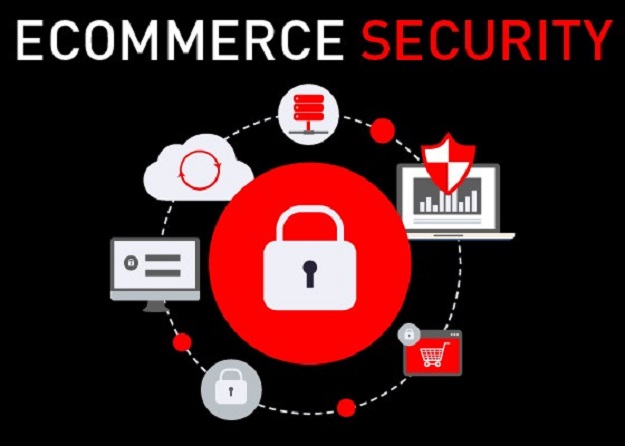
You’ve spent months building the best feature-rich, well-designed eCommerce store for your target audience. But still, a customer hesitates to click the “Pay Now” button. Maybe their hesitation isn’t about price, but about trust in the security of the eStore. So, how secure is your eCommerce store? Well, a single breach can shatter customer confidence and devastate your brand’s reputation. This moves security from a technical concern to a core business strategy directly impacting your bottom line.
In this blog, we’ll discuss eCommerce security and everything around it, in detail. You’ll learn about the critical vulnerabilities, key technologies, infrastructure, and much more. Let’s begin.
Common Security Threats for an eCommerce Store

Before you ask how secure your eCommerce store is, it’s important to know of the security threats. Here are a few common ones.
Malware & Ransomware
Malicious software can infect your store’s server, leading to data theft, site defacement, or SEO spam. Ransomware, a specific type of malware, encrypts your critical files and holds them hostage until a ransom is paid. It may cause catastrophic downtime. That includes customer databases and order histories.
Credit Card Skimming (eSkimming)
Attackers inject malicious code, often through a vulnerable third-party plugin. It’s an attempt to steal customers’ payment card details directly during checkout. This is a primary target for Magecart-style attacks.
Phishing & Social Engineering
Some of these attacks target your employees as well as the software. Deceptive messages or emails trick the violating party into revealing crucial login credentials or financial details. This then creates a backdoor into your systems.
SQL Injection (SQLi)
Attackers can “inject” malicious commands by exploiting vulnerability in your website’s codes. This, in turn, can let them steal, modify, or delete sensitive data stored in your database. This also includes customer information and product records.
Cross-Site Scripting (XSS)
This vulnerability lets the attackers inject malicious script in otherwise clean and trusted websites. When the customer visits this infected page, the script is executed, possibly stealing session cookies or defacing the site.
DDoS Attacks
Distributed Denial-of-Service attacks overwhelm your store’s server with a flood of internet traffic. That makes your website unavailable to legitimate customers. This causes direct revenue loss and erodes trust.
Brute Force Attacks
Automated tools try thousands of username and password combinations on your admin panel. They keep at it until finding one that works. It highlights the critical need for strong, unique passwords.
For excellent security, you need to proactively identify and mitigate these security issues in eCommerce. Fraud detection tools will help with that. That way, you’ll be able to maintain operational continuity and protect your most valuable asset: customer trust.
Key Technologies & Measures for eCommerce Security
Establishing eCommerce security involves a layered defense strategy. That means combining robust technologies with disciplined tactics. Let’s discuss them in detail.
SSL/TLS Certificate
This certificate is showcased by the padlock in the browser bar. An SSL (Secure Socket Layer) certificate can be described as a “tunnel” for providing encryption between the customer’s browser and the server. This ensures that the sold data is transmitted in privacy and cannot be intercepted by eavesdroppers-including login credentials and credit card numbers.
Multi-Factor Authentication (MFA)
Move beyond passwords alone. MFA specifies that two or more verification factors shall be presented to gain access to admin accounts. This often involves a password combined with something they have, such as a code that pops up on their phone via an authenticator app. This evidently lowers the chance of unauthorized access by stolen credentials.
Web Application Firewalls (WAF)
A firewall is like a really intelligent shield placed between your store and incoming Internet traffic. It filters out malicious requests such as SQL Injection and cross-site scripting. That is, before they can be utilized to exploit a vulnerability to shut down the site or steal data.
Secure Payment Gateways & Tokenization
The raw credit card information is never stored on your server. A certified payment gateway safely performs its own transactions on a compliant infrastructure. Tokenization replaces sensitive card details with a unique, random token (“token”) for future transactions. So your system only handles worthless placeholders, not valuable data.
Data Encryption
SSL protects data while moving to and from your site, whereas encryption serves to scramble certain sensitive info kept in your database such as customer addresses. In case of a breach, encrypted data will be useless and unreadable for the one who does not possess the unique decryption key.
That’s why it is one of the best ways to protect against cyber attacks.
Malware & Vulnerability Scanning
Preemptive vigilance comprises the whole risk management for eCommerce. Automated scanners run continuously scanning your website’s files and code for malware, unauthorized changes, and known security holes.
This approach allows the developers to detect threats early so that such threats can be quarantined and cleared off before causing harm or breaching logic.
eCommerce security, with its very own arsenal of technical measures, necessitates never being seen as a one-time thing. You need to commit yourself into these activities forever if only to protect your revenue, reputation, and clients.
Legal & Compliance Standards for eCommerce Security

For an online business, security is therefore beyond technical best practice; it is, in fact, a legal obligation. Reliance on conforming standards can safeguard your company from the bills of heavy fines and lawsuits, and also from reputational damage.
PCI DSS (Payment Card Industry Data Security Standard)
PCI DSS provides a rigorous framework for secure payment systems. PCI compliance for eCommerce protects cardholder data and establishes strong access controls. It must be validated annually through a self-assessment questionnaire (SAQ). It may also be done as an audit from an external party claimed as Qualified Security Assessor (QSA) depending on your transaction volume.
GDPR & CCPA (Data Privacy Regulations)
The General Data Protection Regulation (GDPR) for the EU and the California Consumer Privacy Act (CCPA) grant consumers rights over their personal data.
For eCommerce that means: disclosing data collection. They also allow for the option to opt out, and fulfill user requests to access or delete information expeditiously. Noncompliance can result in enormous penalties.
Regular Security Audits & Penetration Testing
A security audit is a comprehensive check-up of your policies and digital infrastructure to assert they are all configured correctly. Pentesting or penetration testing consists of a simulated attack that comes afterward.
The ethical hackers try to penetrate your defense as an actual criminal would, to unearth hidden vulnerabilities before they get exploited.
When paired together, security transforms itself from a theoretical plan into a practical, resilient defense.
Best Practices for Internal Training & Policies
Your technology and the platform it’s used on is only as strong as the people who use it. Mistakes by humans remain among the root causes of security incidents. So, comprehensive internal training and clear policies must be your foremost line of defence.
Implement a Formal Security Policy
Draft an explicit set of rules around data handling, password creation, and device usage. This forms one source of truth and sets expectations for every team player, from administrator through intern.
Conduct Regular & Engaging Training
Move beyond annual lectures. You need to teach staff how to identify threats like suspicious emails, social engineering attempts, and fraudulent payment requests. Use quarterly micro-training sessions, simulated phishing exercises, and real-world scenarios for that.
Adopt the Principle of Least Privilege
Limit employees’ access to systems and data to an absolute minimum, solely for their specific job requirements. Account compromise can result in any form of damage-if accidental or malicious.
Establish a Clear Incident Response Plan
Every employee should strictly know what action they need to take and whom they need to inform in case of an alleged security breach. Having a system to report potential threats will greatly reduce the assess and remediate time of damages.
Promote a Culture of Security
Consider security not as a restriction but a shared responsibility. It safeguards everyone–the company, their jobs, and your customers. Encourage curiosity and create an environment where staff members can report suspicious occurrences without fear of reprimand.
The implementation of security is something your teams and customers need to be aware of. That’s how the website runs secure and trustworthy.
Emerging Threat Responses to Security of an eCommerce Website
The threat landscape is evolving rapidly. You should stay ahead of the curve, preempt, and neutralize next-generation attacks. This is how emerging technology has been assisting.
AI-Powered Threat Detection
AI systems move past a rule-based definition of threats, with abnormal behavior taken into account. They analyze a far greater amount of traffic and user data in real tim. The system analyzes an almost obscene amount-of subtle, emerging, fraudulent, or threatening patterns for defense purposes ahead of time. Traditional tools could possibly miss this.
Zero-Trust Architecture
The saying “Never trust, always verify” replaces the old castle-and-moat paradigm. Zero Trust enforces strict identity validation for each individual or device requesting access to resources in your network. That is, regardless of whether they are within or outside your organization. This reduces harm from compromised credentials.
Post-Quantum Cryptography (PQC) Preparation
Quantum computing poses a future risk to current encryption standards. PQC stands for working towards adopting a new and quantum-resistant cryptographic algorithm. That means long-term protection of sensitive data.
If somebody acts today, they will put their customer data in the safest place against tomorrow’s computational threats.
Enhanced Third-Party Risk Management
IT vendor security shifts from an easy-to-check list to a real process. Continuing to assess the security posture of your plugins, APIs, and service providers via audits-all the while requiring compliance certifications-will keep the entire supply chain from becoming the weak link.
Advanced strategies such as these begin to take you away from merely defending against known threats toward building resilience against the unknown.
Final Thoughts
The security of your eCommerce store is a continuous journey of vigilance and adaptation. It directly shapes customer trust, protects your revenue, and safeguards your brand’s reputation.
You need to do everything from implementing robust technologies and adhering to compliance standards to fostering a culture of security within your team. Ultimately, you have to invest in these protective measures for the long-term viability of your business.
Begin your audit today; your business’s future depends on it.


