


As we move through 2025, the mobile app development landscape keeps changing at a breakneck speed. Pushed by innovations in cross-platform tools, integration with AI, and changing user expectations, developers today must design faster, more secure, and highly responsive applications. In such a fast-changing scenario, choosing the appropriate mobile app development frameworks and tools is not a choice anymore, it’s a strategic necessity.
As more and more options become increasingly present, selecting the appropriate stack has a major impact on performance, scalability, and time-to-market. From developing native apps, cross-platform applications, to testing low-code platforms, information remains paramount.
Here, we discuss the best mobile app tools that 2025 has in store and feature the frameworks that rule mobile app development for 2025. You will learn what is in, what is cost-effective, and what technologies are shaping the future of app development.
Mobile App Development in 2025: A Quick Landscape Overview
The mobile app development business of 2025 is characterized by agility, intelligence, and scalability. Cross-platform development, nowadays, offers a native deployment from a single codebase to iOS and Android, thus drastically lowering time-to-market and maintenance costs. Flutter, React Native, and Kotlin Multiplatform stand tall as the genuine instruments for providing efficient platform-native user experiences.
At the same time, AI-powered apps and super apps are redefining user expectations. From recommendations to intelligent automation, AI integration is no longer an option—it’s a requirement. Also, the explosion of low-code and no-code platforms is enabling non-technical users to join the ranks of app builders, bringing innovation beyond the development teams.
With users increasingly seeking faster, more secure, and high-performing mobile experiences, the onus is on developers to deliver. Recent industry numbers indicate that mobile users are abandoning apps that take longer than 2 seconds on average to load, something that underscores the urgent importance of mobile app performance.
Key Criteria for Choosing the Right Tool or Framework
When considering the most suitable mobile development framework in 2025, there needs to be the right balance of performance, flexibility, and scalability over the long term. The initial consideration should be between native and cross-platform development. While cross-platform solutions such as Flutter and React Native provide quicker deployment and reuse of code, native development usually offers better performance and integration with the platform.
Just as crucial is the degree of community support and frequency of updates. Frameworks with healthy communities and regular updates enjoy better security, regular improvements, and quicker troubleshooting.
The capacity to create intuitive, contemporary interfaces relies significantly on a framework’s UI flexibility and third-party integration capabilities, particularly for feature-heavy apps that depend on external APIs, analytics, or payment gateways.
Finally, scalability and affordability are essential. Your selected framework must support growth without increasing development expenses. Unsurprisingly, many of the top mobile app development companies in 2025 prioritize frameworks that deliver high performance, flexibility, and support for scalable solutions.
Best Frameworks Dominating in 2025
1. Flutter (Google)
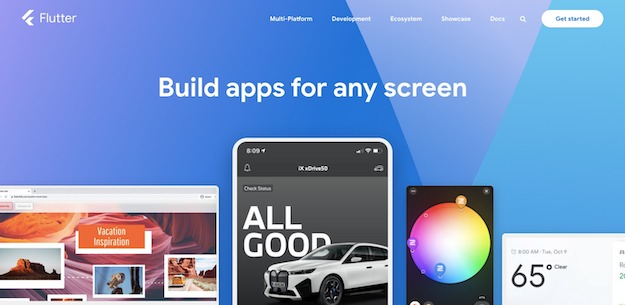
Flutter remains the number one among the best mobile app frameworks of 2025 due to Google’s regular updates and the highly active developer ecosystem. It is an open-source UI toolkit allowing developers to develop natively compiled mobile, web, and desktop apps using a single codebase.
Best Use Cases: Perfect for startups and businesses wanting visually rich, cross-platform applications with fast development cycles.
Pros:
# Single codebase for Android and iOS
# Native-like performance with high-speed performance
# Rich widget library for native-like UI/UX
Popular Apps: Google Ads, Alibaba, eBay Motors
2. React Native (Meta)
React Native is a leading candidate for the Flutter vs React Native 2025 challenge. Created by Meta, it supports mobile app development with JavaScript and React, providing a strong choice for web-technology-aware developers.
Best Use Cases: Fast-deployment and large community-driven apps, e.g., social sites or MVPs.
Pros:
# Reusable components
# Active ecosystem and big developer community
# Hot reloading for quicker development
Popular Apps: Instagram, Facebook, Airbnb
3. Kotlin Multiplatform

Kotlin Multiplatform has become more mature by 2025, providing a new means to share logic between Android, iOS, and web applications. It differs from complete UI toolkits in focusing on sharing business logic while permitting native UI development.
Best Use Cases: Applications requiring high-performance native UIs with common backend logic, particularly in enterprise applications.
Pros:
# Native performance
# Great IDE support from JetBrains
# Favors modular, maintainable codebases
Popular Apps: Target’s internal retail applications, VMware platforms
4. SwiftUI (for iOS)

SwiftUI is Apple’s official declarative UI framework, and thus the best choice for creating contemporary iOS apps in 2025. Its native integration with the Apple ecosystem makes it the trusted option for developers with Apple-first orientations.
Best Use Cases: Single-platform iOS apps with a native feel, performance, and access to cutting-edge iOS features.
Pros:
# Declarative syntax
# Support for accessibility and localization is provided automatically
# Tight Xcode integration
Popular Apps: Apple’s own apps, Fitness+, and other fintech apps
5. Ionic
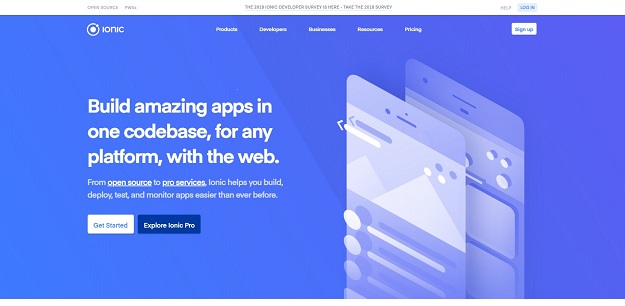
Ionic has changed hybrid app development with an emphasis on web-first technologies such as HTML, CSS, and JavaScript. Its version 2025 utilizes Capacitor for native functionality and provides higher flexibility for progressive web apps (PWAs).
Best Use Cases: MVPs, PWAs, or cross-platform applications demanding quick prototyping and alignment of web technologies.
Pros:
# Web technology-based
# Extensive plugin support
# Accelerated development and testing cycles
Popular Apps: Sworkit, Diesel, MarketWatch
6. NativeScript

NativeScript provides developers with the freedom to develop mobile apps with JavaScript, TypeScript, or Angular and native performance. It has found a niche among developers who appreciate direct access to native APIs without having to leave the JavaScript ecosystem.
Best Use Cases: Custom, feature-rich mobile apps with native performance but web development experience.
Pros:
# Native UI and performance
# No WebView dependencies
# Easy third-party plugin integration
Popular Apps: Regelneef, Daily Nanny
The cross-platform options ecosystem is expected to be under 2025, with developers nowadays putting greater consideration on flexibility, speed, and scalability. Depending upon the amount of the project, performance requirements, or team expertise, the developers may opt for Flutter, React Native, or something more platform-specific, such as SwiftUI or Kotlin Multiplatform.
Conclusion
As mobile app development continues to flourish in 2025, fewer choices are left for developers. A project has its own set of technical requirements, scaling constraints, and user expectations; thus, it should be treated accordingly while selecting the development platform. 2025 app frameworks are more powerful, yet more focused on performance, cross-platform support, and speedy deployment.
In this fast-paced environment, being at the forefront would imply employing technologies that will shape the future of mobile application development. A good framework can ease your work and facilitate the success of your product if you’re building a native experience or deploying from one platform to many.
Ready to create the next big mobile experience? Select the framework that suits your needs.


